
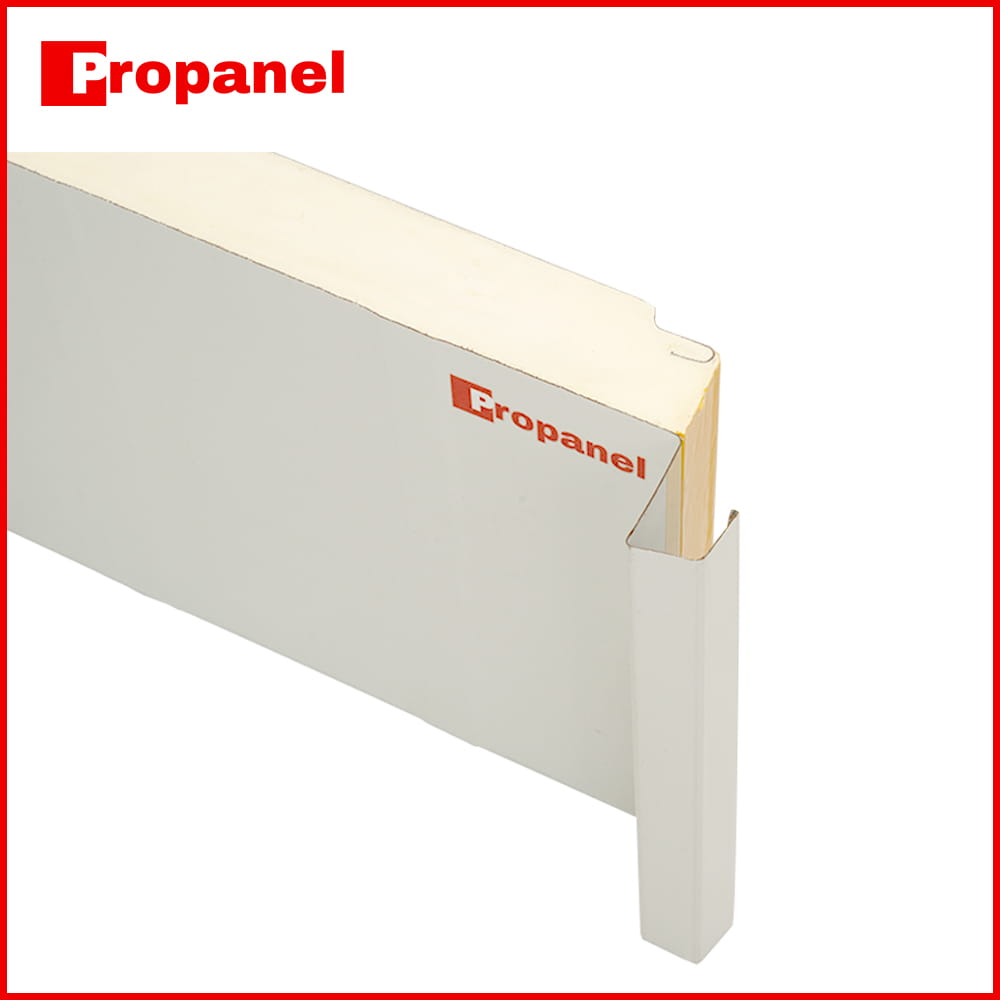
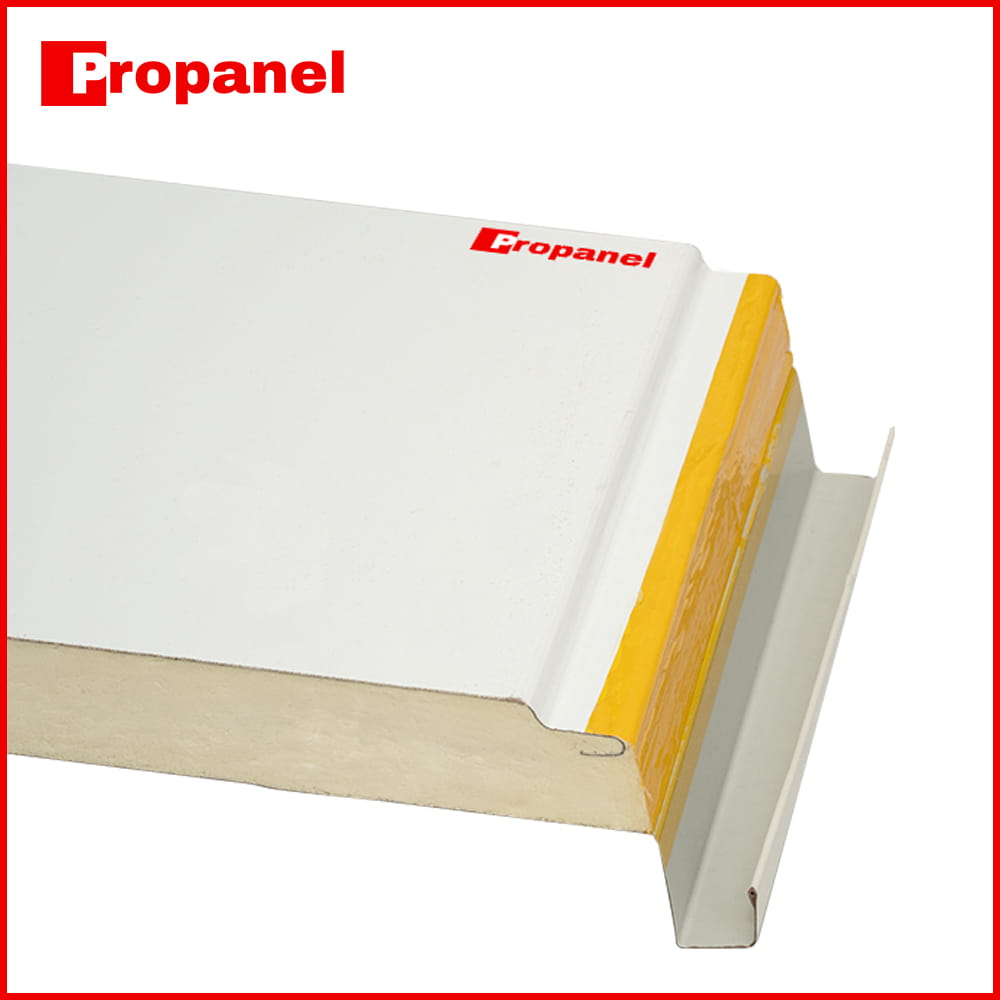
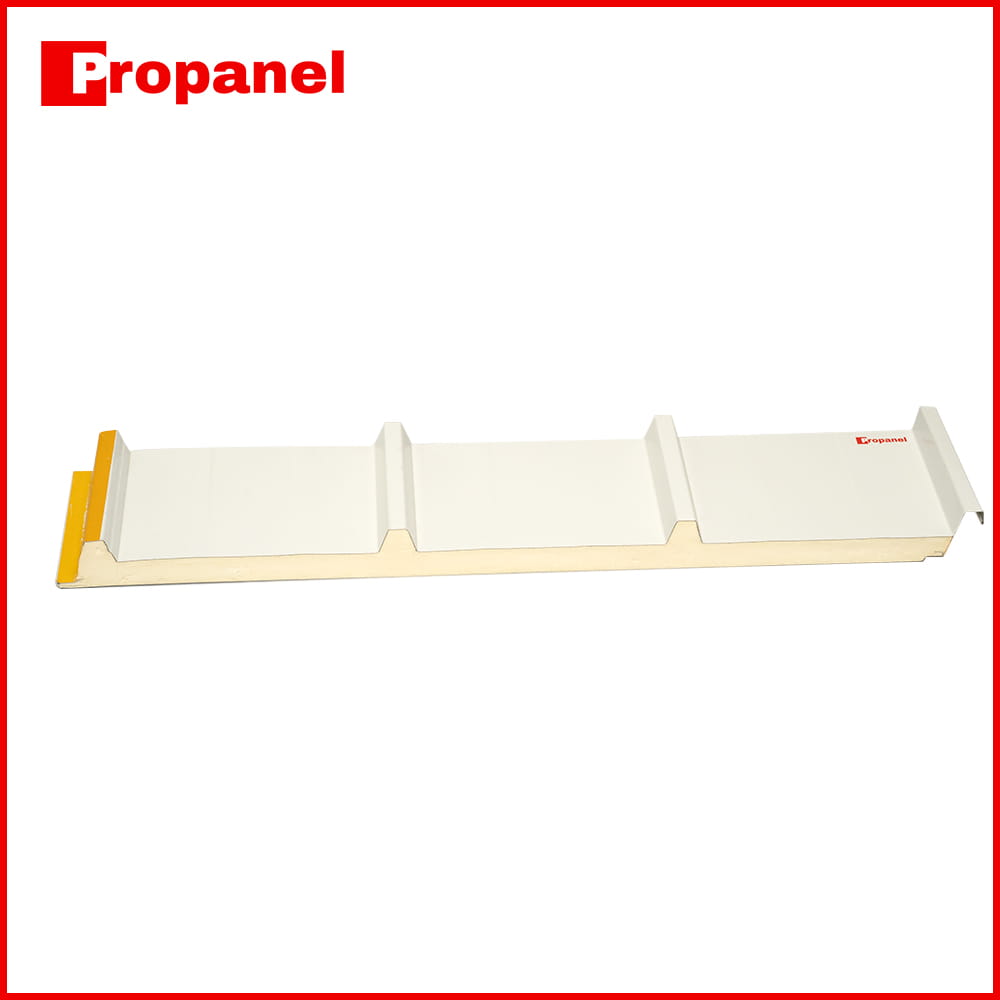
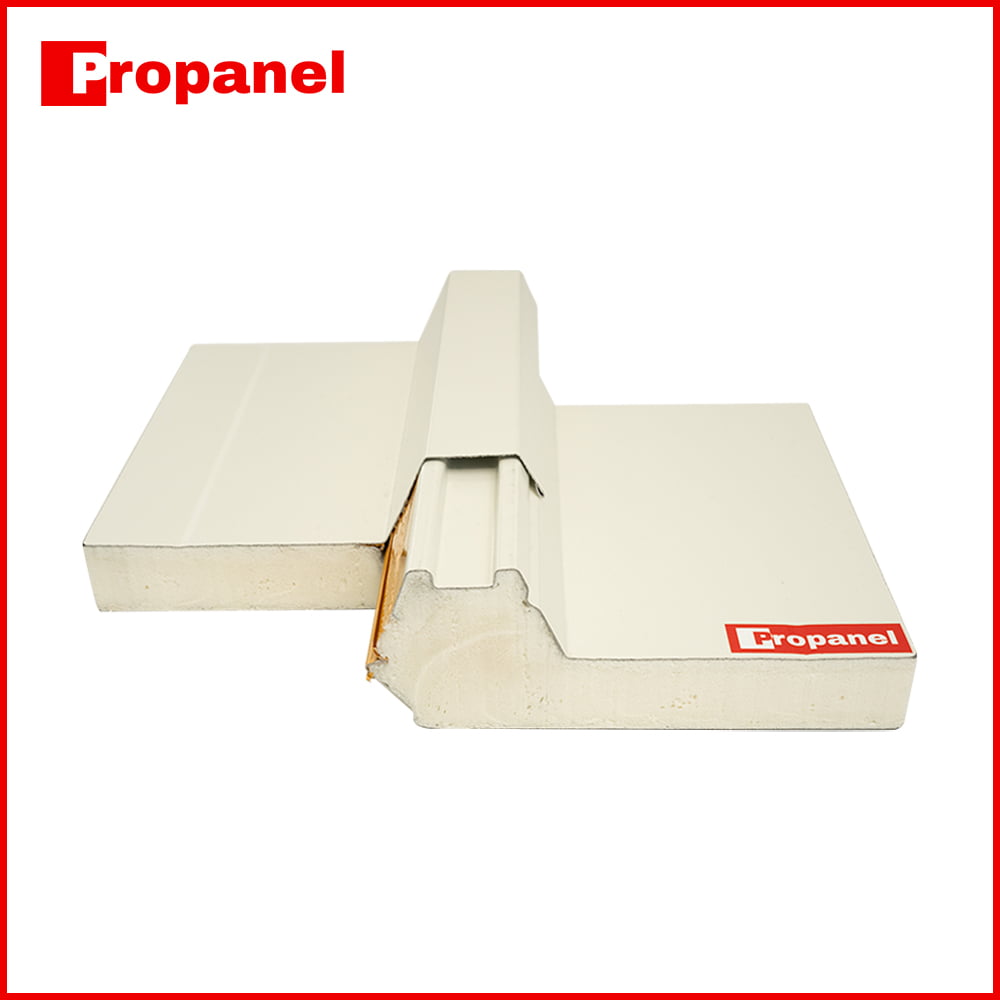
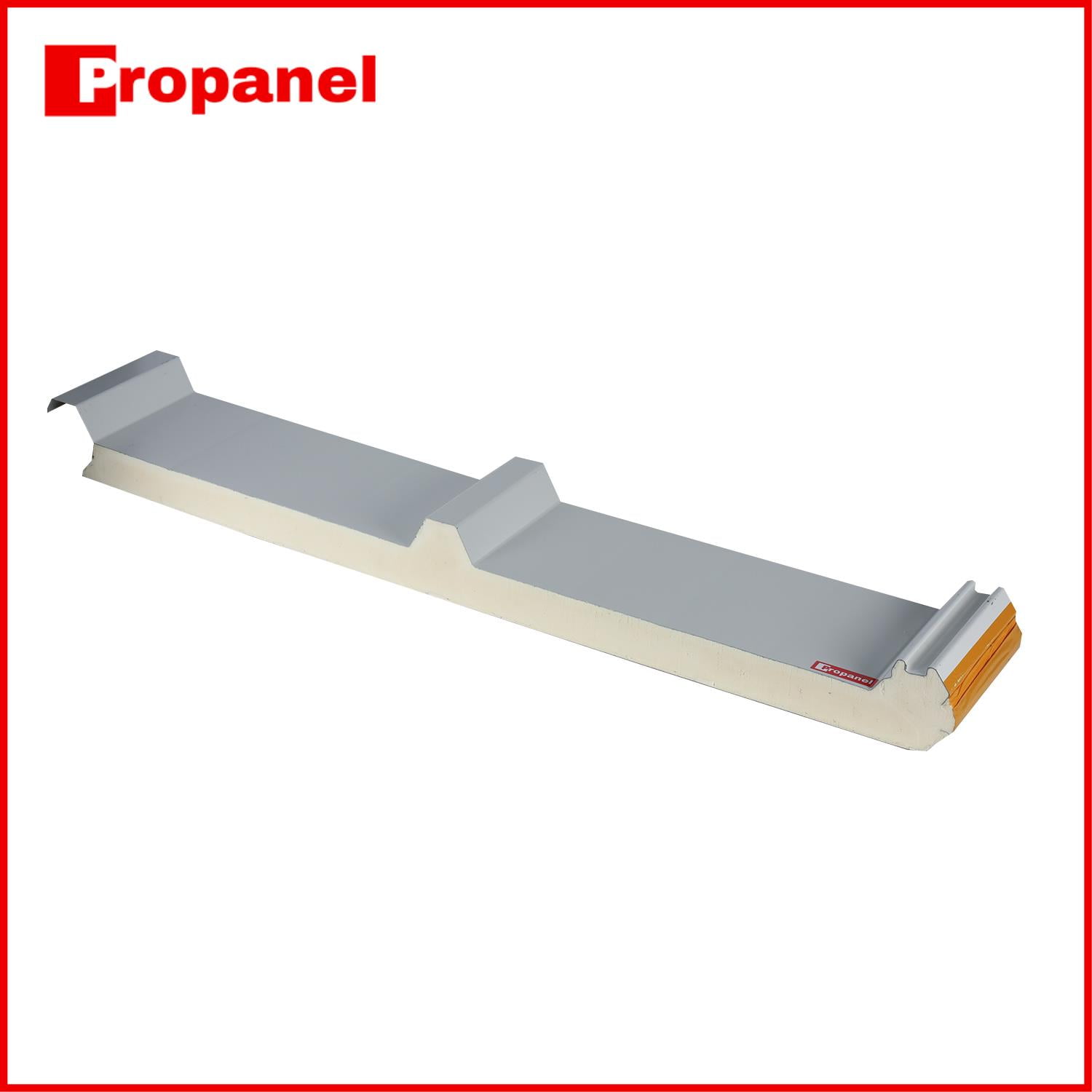
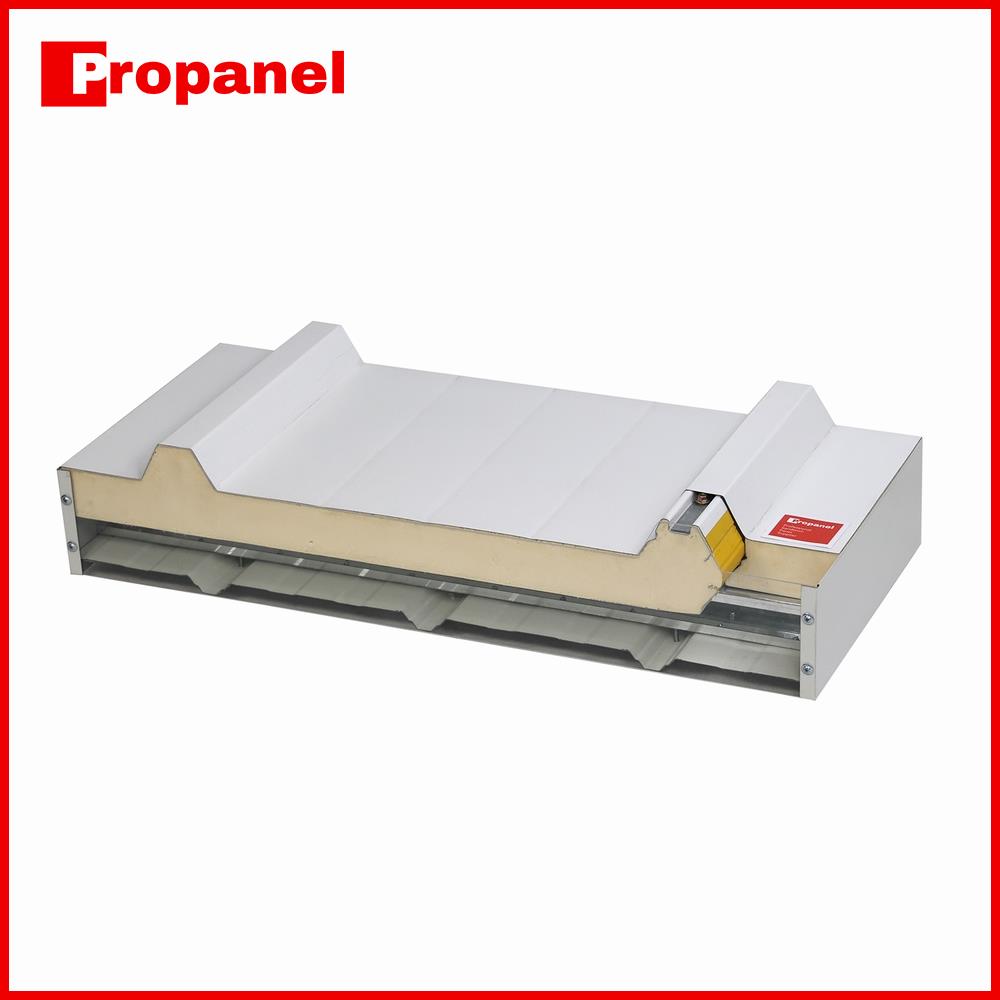
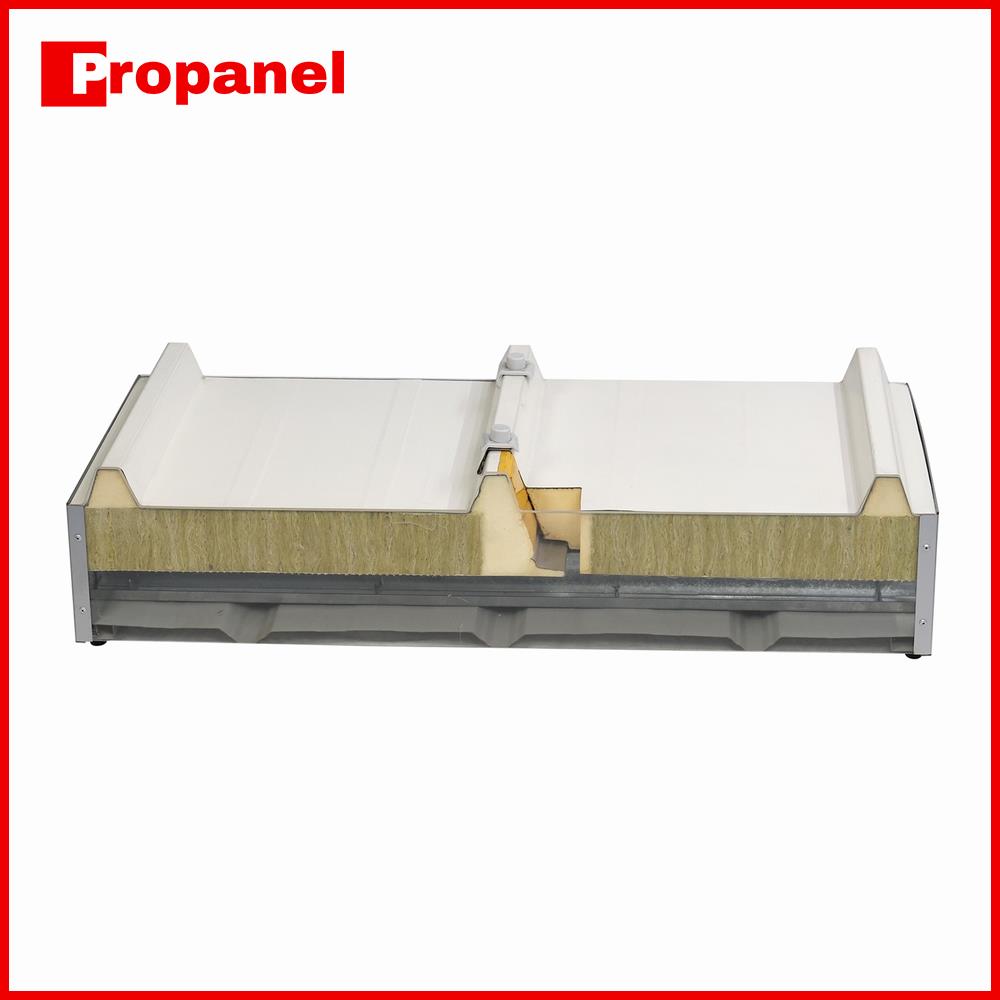
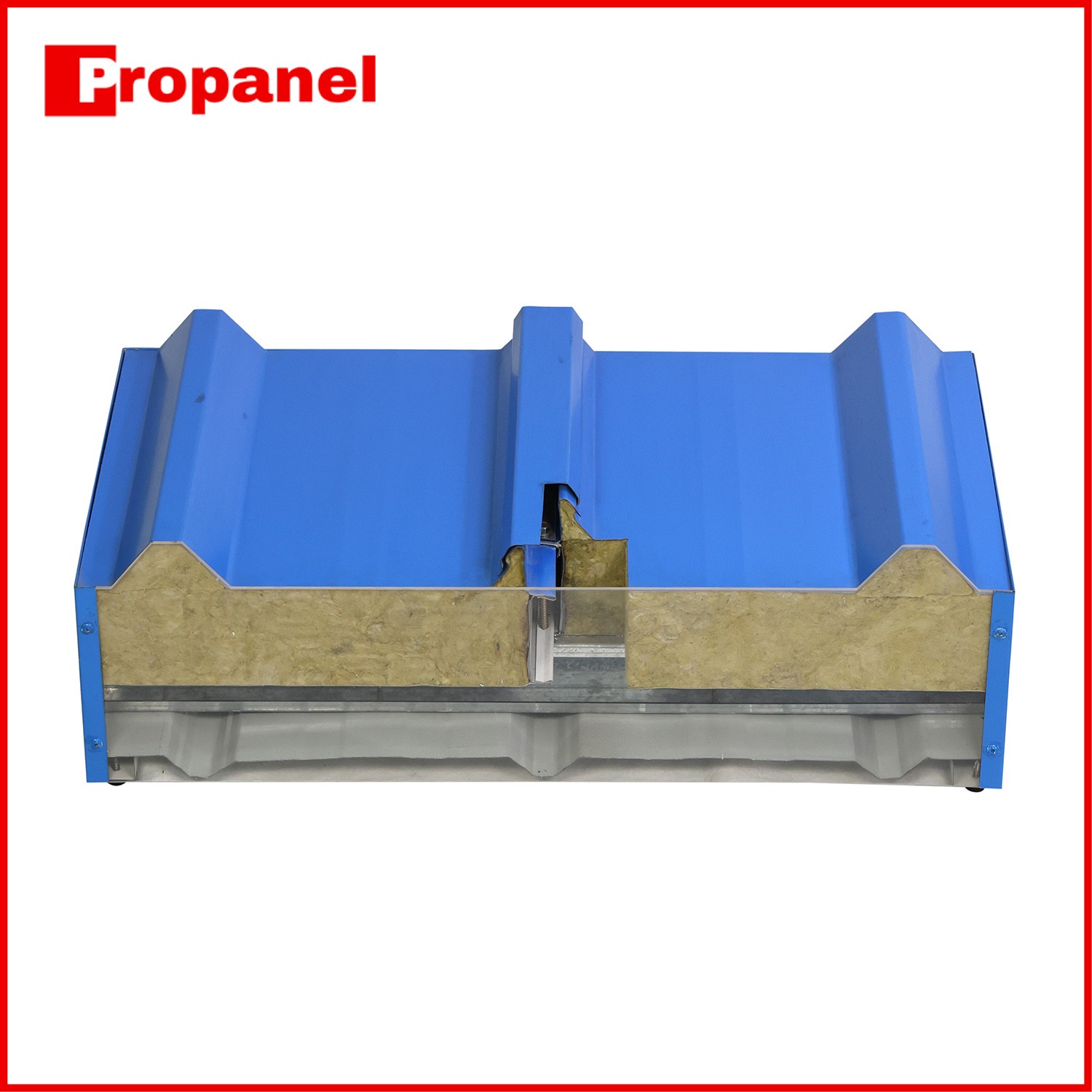
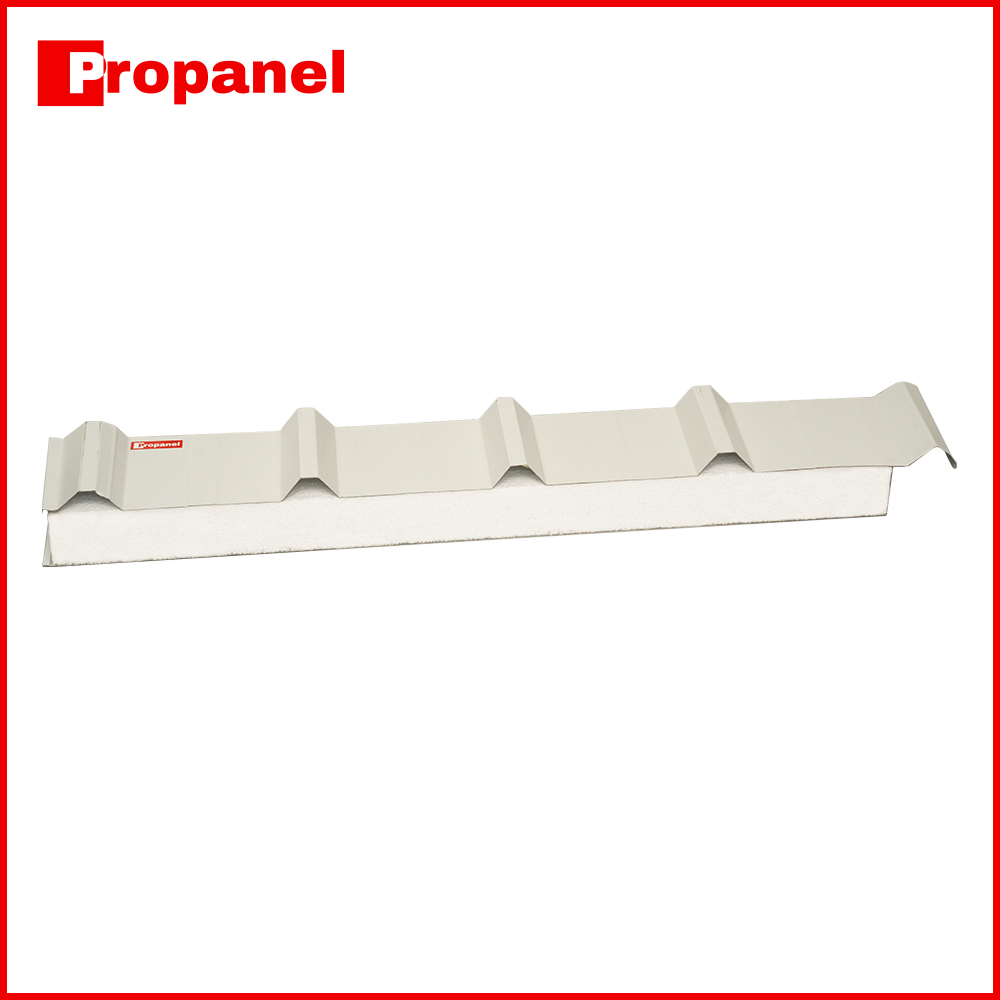
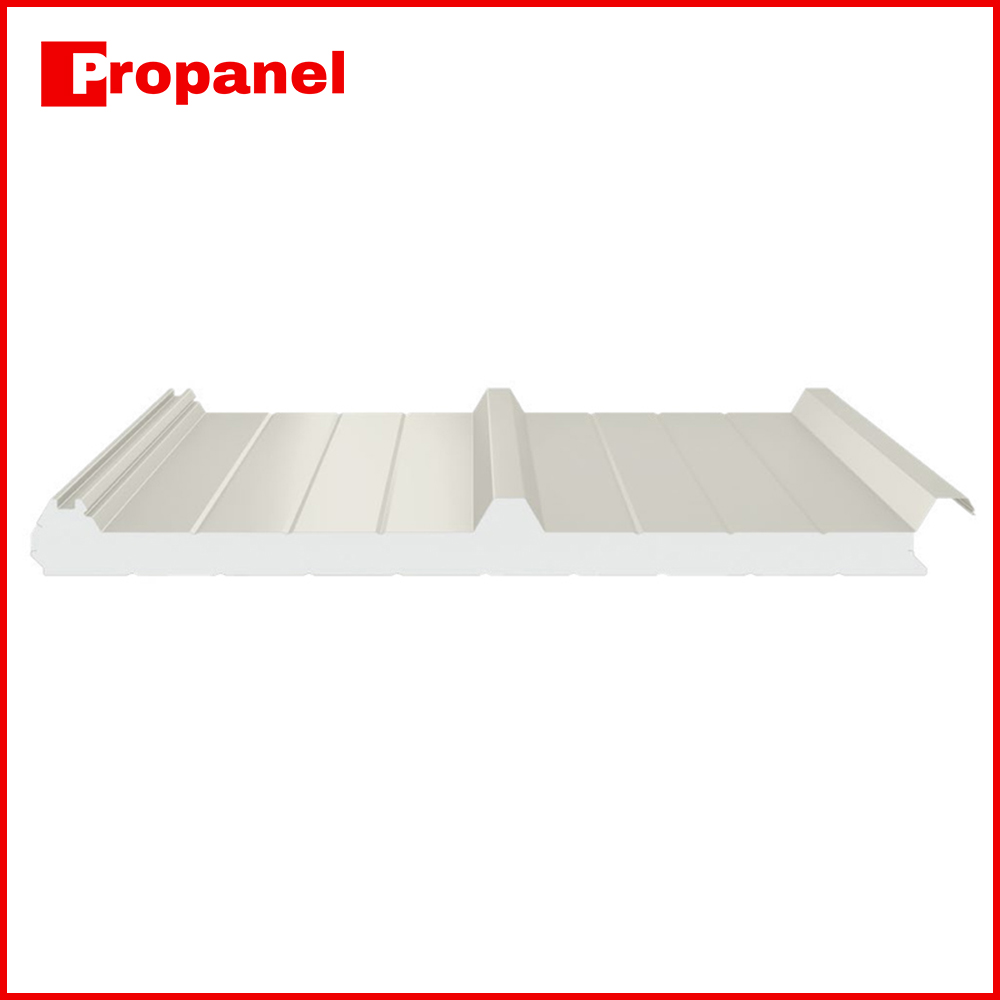
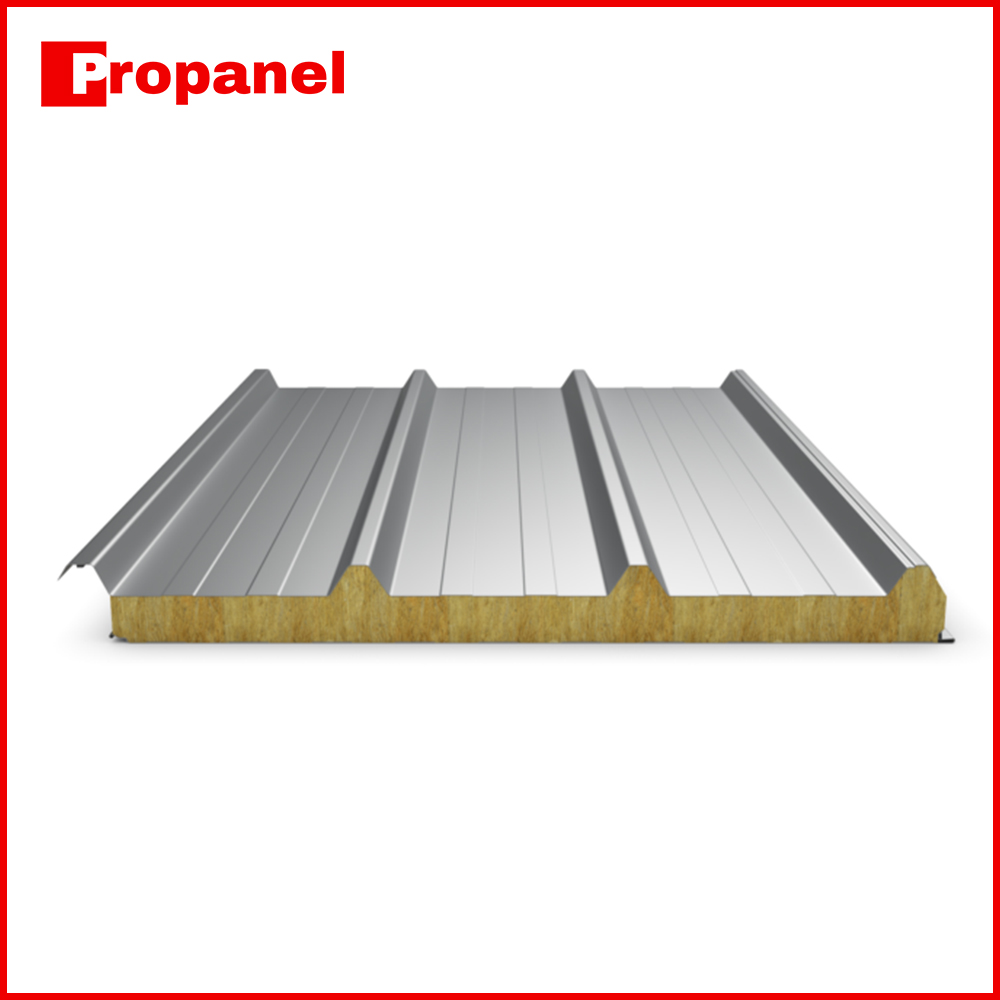
Our PU/PIR sandwich panels feature a rigid foam core bonded to corrosion‑resistant steel facings. With thermal conductivity down to 0.022 W/m·K, Class A fire rating, and excellent structural strength, they offer superior insulation and durability. Lightweight, easy to install, and immune to moisture – the smart choice for industrial and commercial buildings. Trust Propanel for proven performance
Numéro d'article :
PUROOF0001Commande (MOQ) :
500 mPaiement :
USD 30% PPCouleur :
CustomizedDensité du matériau de base :
40 Kg/m³Port d'expédition :
Qingdao, ChinaDélai de mise en œuvre :
30-45 daysOrigine du produit :
Shandong, China
|
Specifications |
|
|
Type |
|
|
Density |
40~45kg/m³ |
|
Thickness |
40/50/60/75/80/100/120/150/200mm |
|
Metal skin thickness |
0.4~0.8mm |
|
Panel Effective Width |
1000mm for wall and roof |
|
Skin material |
PPGL,PPGI,Stainless steel,aluminum coil |
|
Pre-painted |
PE/SMP/HDP/PVDF etc. |
|
Fireproof Grade |
B1 |
|
Thermal Conductivity |
≤0.023/≤0.02 |
|
Temperature Range |
40~43/40~50℃ |
|
Length |
Max 11.9m or Customized. |
|
Customized design is welcomed. |
|
The 30mm PIR sandwich roofing panel packs a rigid polyisocyanurate foam core between two corrosion-resistant steel skins. With thermal conductivity around 0.021–0.023 W/m·K, it delivers real insulation performance without adding bulk. The R-value comes in at roughly 1.3 to 1.5 m²·K/W – enough to make a noticeable difference in a building’s energy performance. And unlike some cheaper foam boards that lose effectiveness over time, PIR foam holds its thermal properties for the long haul.
The steel facings are pre-coated to resist corrosion and UV exposure, with a wide range of RAL color options available. The panel width is the standard 1,200mm, which keeps joint counts low and installation moving fast. Installation runs about 40% faster than traditional roofing methods – less time on ladders, less labor cost, less headache.
What about load capacity? The profiled steel skins give the panel a solid bending resistance. In many applications, 30mm PIR panels allow wider purlin spacing compared to single-skin sheeting, which means less steel in the substructure and lower material costs. The panel complies with ASTM C1289 and EN 14509 standards for quality and durability. It handles temperatures from -40°C up to +120°C without breaking down. Fire rating meets Class B-s1,d0 per EN 13501-1, so you're not trading safety for thinness.
Allowable span and heat transfer coefficient of PROPANEL polyurethane roof Sandwich panel(allowable deformation f ≤ L/240)
|
Thickness (mm) |
Heat transfer (W/m2k) |
Weight (kg) |
Load P=KN/m2 |
0.60 |
0.80 |
1.00 |
1.20 |
1.50 |
|
30 |
0.32 |
9.32 |
L(m) |
2.60 |
2.30 |
2.08 |
1.91 |
1.72 |
|
50 |
0.31 |
10.15 |
L(m) |
3.59 |
3.17 |
2.85 |
2.61 |
2.33 |
|
75 |
0.21 |
11.18 |
L(m) |
4.64 |
4.07 |
3.66 |
3.34 |
2.96 |
|
100 |
0.19 |
12.22 |
L(m) |
5.57 |
4.88 |
4.38 |
3.99 |
3.53 |
|
120 |
0.16 |
13.05 |
L(m) |
6.28 |
5.49 |
4.92 |
4.48 |
3.97 |
|
150 |
0.11 |
14.30 |
L(m) |
7.30 |
6.39 |
5.73 |
5.22 |
4.62 |
Note:0.5mm outer steel sheet and 0.4mm inner steel sheet.
3 Packing and Loading
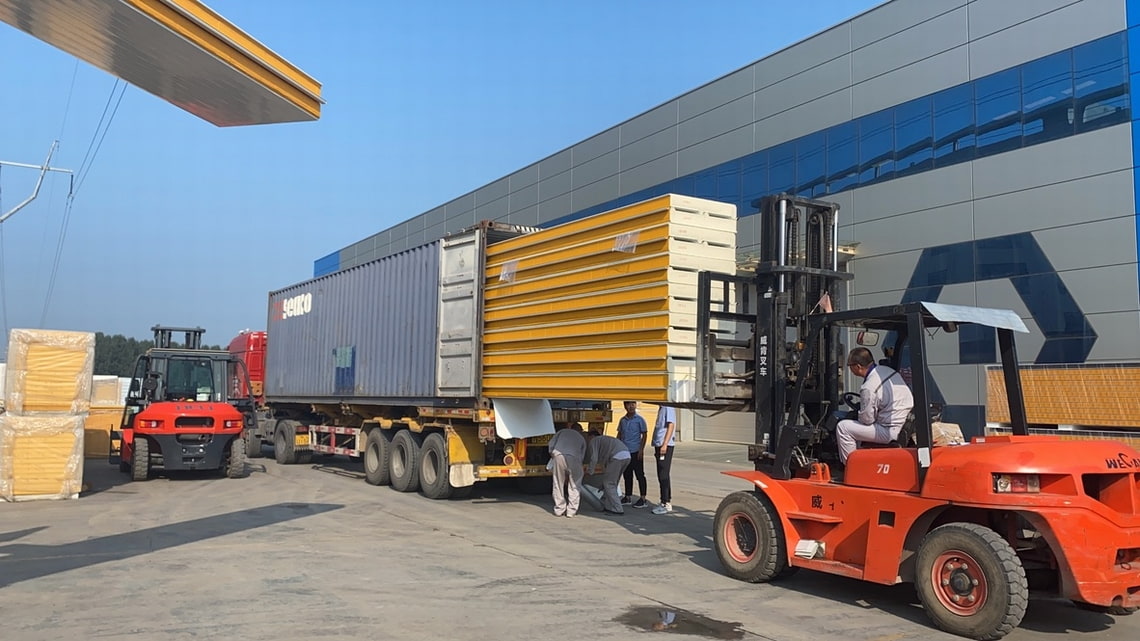
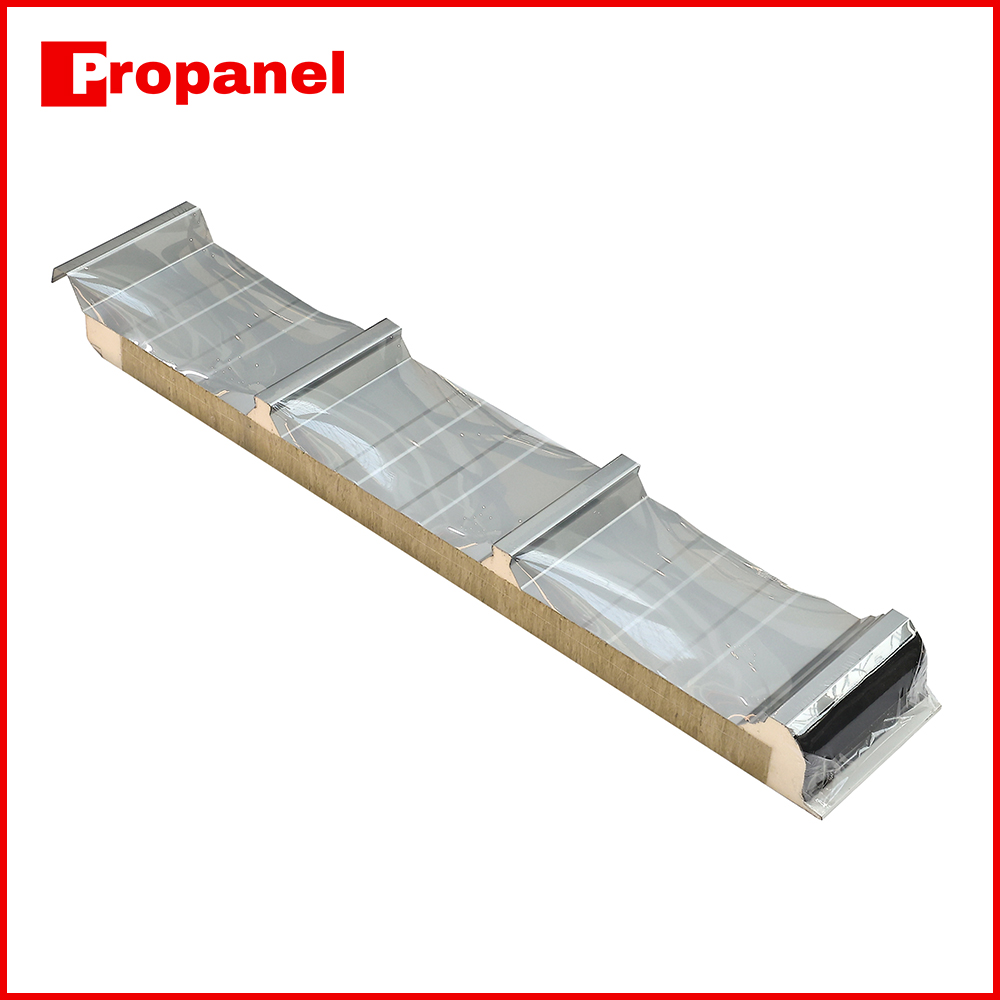
Packing with Pallets
This is the standard for most orders, and for good reason. Panels get stacked on wooden or steel pallets, strapped down tight, and wrapped for protection. The big advantage? Easy handling. When your shipment arrives, a forklift can unload palletized panels in a fraction of the time it takes to move loose stacks. That means less labor cost and less risk of damage during unloading. For large orders, pallets also keep panels stable in transit – no shifting, no rubbing against each other. Steel pallets add extra durability and avoid the fumigation fees that sometimes come with wood.
Packing without Pallets
Sometimes you need to squeeze every cubic meter out of a shipping container. That's when pallets get skipped. Without them, you can fit more panels into the same container – sometimes up to 10-15% more. The trade-off is handling. Unloading takes longer because you can't just fork them off, and you need more care on the receiving end to avoid scratching or denting the edges. But when shipping costs are the main concern, this method makes sense. It's also common for smaller orders where pallet costs would eat up a big chunk of the budget.
Container Loading and Transit
Whether palletized or loose, the loading process itself is where good shippers earn their keep. Panels get arranged in the container with careful weight distribution – you don't want all the weight on one side. Straps go across the stacks to stop movement, and the edges get protective wrap to guard against scrapes. For palletized loads, we often use inflatable dunnage bags to fill gaps and keep everything from sliding when the ship hits rough seas.
4 Project cases of PU Roofing Sandwich Panels
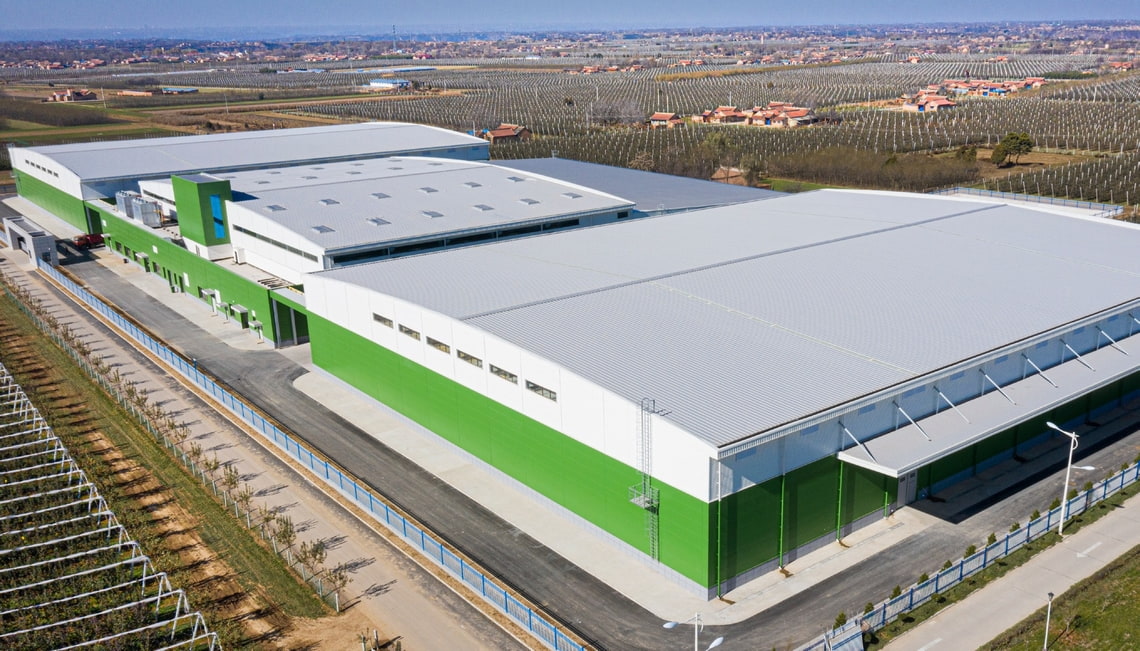
Project cases of 30mm PU Roofing Sandwich Panels--USA cold storage project 3000 square meters
5 RFQS of PU/PIR Roofing Sandwich Panels
I. Q: What thickness options are available for PU/PIR roofing sandwich panels?
A: For PU/PIR roofing panels, we offer standard thicknesses of 30mm, 50mm, 75mm, and 100mm. Those sizes handle most applications, but we're also set up to do custom thicknesses if your project calls for something specific. The right thickness really depends on your climate and the temperature differential you're trying to maintain. A warehouse in a mild climate might get by with 50mm, while a freezer facility in a hot region will need the full 100mm.
II. Q: How does the thermal insulation performance of PU/PIR roofing panels compare to other materials?
A: PU/PIR panels outperform EPS and mineral wool by a noticeable margin – roughly 30 to 40 percent better R-values for the same thickness. That difference becomes real money when you're heating or cooling a large space year-round. A colder climate or a temperature-sensitive operation can see the energy savings pay back the upfront cost difference in just a few years.
III. Q: What is the installation process for PU/PIR roofing sandwich panels?
A: These panels are designed to go up fast. The tongue-and-groove connections lock together quickly, and the panels are light enough that a crew doesn't struggle with them. Compared to traditional roofing methods – think multiple layers, wet trades, long cure times – installation time can be cut in half. Less time on the roof means lower labor costs and earlier occupancy.
IV. Q: What fire safety ratings do your PU/PIR roofing sandwich panels have?
A: Fire ratings depend on the foam formulation. Standard PU panels typically achieve a Class B rating per ASTM E84, which is solid for most industrial and commercial applications. PIR panels offer enhanced fire resistance – they char on the surface rather than melting and dripping, which slows flame spread and reduces smoke. For projects with stricter fire codes, PIR is the better bet.
V. Q: What is the weight difference between PU/PIR roofing panels and traditional roofing materials?
A: You're looking at roughly 10 to 12 kilograms per square meter for PU/PIR panels. Compare that to concrete or clay alternatives, which can run 30 to 40 kilograms per square meter or more – we're talking 60 to 70 percent lighter. That lighter weight means the supporting steel structure doesn't have to be as heavy, which saves money on the frame and foundation before you even start installing the roof.

Droit d'auteur
@ 2026 CHENGDU PROPANEL TECH CO., LTD. Tous droits réservés
.  RÉSEAU PRIS EN CHARGE
Hi! Click one of our members below to chat on